8.2 Context switch overview
The term “context switch” refers to the steps involved in a CPU leaving off execution of one kernel thread (usually for later resumption), and resuming execution of a different kernel thread; this switching is the heart of multiplexing. Xv6 does not directly context switch from one process’s kernel thread to another process’s kernel thread; instead, a kernel thread gives up the CPU by context-switching to that CPU’s “scheduler thread,” and the scheduler thread picks a different process’s kernel thread to run, and context-switches to that thread.
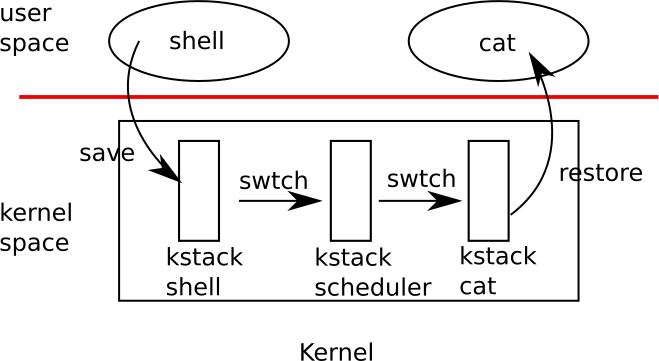
At a broader scope, the steps involved in switching from one user process to another are illustrated in Figure 8.1: a trap (system call or interrupt) from the old process’s user space to its kernel thread, a context switch to the current CPU’s scheduler thread, a context switch to a new process’s kernel thread, and a trap return to the user-level process.